



A retired teacher from Ohio pays $80 once and never covers a national park entrance fee again. A couple in their late 60s knocks 10% off every Amtrak trip between Chicago and Seattle. A solo traveler books a Marriott room in Savannah at a rate the hotel never advertises on its homepage. These are not loyalty-program tricks or coupon hacks. They are standing discounts available to millions of Americans over 62, and most people who qualify have never claimed a single one.
“I had no idea the Senior Pass even existed until a ranger at Glacier mentioned it,” says Linda Ferris, a 68-year-old retired librarian from Boise, Idaho, who bought the lifetime version in 2024 and estimates she has saved more than $400 on park entrance and camping fees since then. “I tell every friend who is planning a road trip.”
Travel costs have stayed stubbornly elevated heading into summer 2026. The Bureau of Labor Statistics Consumer Price Index for lodging away from home remains well above its pre-pandemic baseline, and rental car prices have not fully retreated from their post-2020 surge. But retirees who know where to look can layer a handful of age-based discounts and trim hundreds of dollars from a single trip. Here are the strongest, most verifiable deals available right now, along with what they actually save you in practice.
The America the Beautiful Senior Pass
If you use only one discount on this list, make it this one. U.S. citizens and permanent residents age 62 and older can buy the America the Beautiful Senior Pass for $20 per year or $80 for a lifetime version. That $80 covers entrance and standard amenity fees at more than 2,000 federal recreation sites managed by six agencies: the National Park Service, the U.S. Forest Service, the Bureau of Land Management, the U.S. Fish and Wildlife Service, the Bureau of Reclamation, and the U.S. Army Corps of Engineers.
The pass does more than waive gate fees. According to U.S. Forest Service guidance, holders also receive a 50% discount on expanded amenity fees, which include campsite reservations, boat launches, swimming areas, and some guided tours. For retirees who camp frequently or visit multiple sites on a road trip, that half-price reduction adds up fast. A week-long camping loop through Utah’s national parks, where individual campsite fees run $20 to $35 per night on Recreation.gov, could easily save $60 to $100 in campsite fees alone, on top of waived entrance charges.
One detail worth knowing: about 110 of the National Park Service’s 400-plus sites charge an entrance fee, according to the NPS. Many parks, monuments, and historic sites are free regardless of whether you hold a pass. The real financial payoff for frequent travelers is the camping and amenity discount, not just the gate savings.
The lifetime pass is available through the USGS online store or in person at any federal recreation site that sells passes. Holders of the $20 annual version can upgrade to the lifetime pass by paying the $60 difference. At per-vehicle fee areas, the pass admits the cardholder plus all passengers in a single, private, non-commercial vehicle. At per-person fee areas, it covers the cardholder plus three additional adults. Children 15 and under always enter free.
One important limitation: the Senior Pass is restricted to U.S. citizens and permanent residents. Nonresident visitors can purchase a separate interagency pass, but it does not include senior pricing. Mixed-citizenship travel groups should plan accordingly.
Amtrak’s senior rail discount
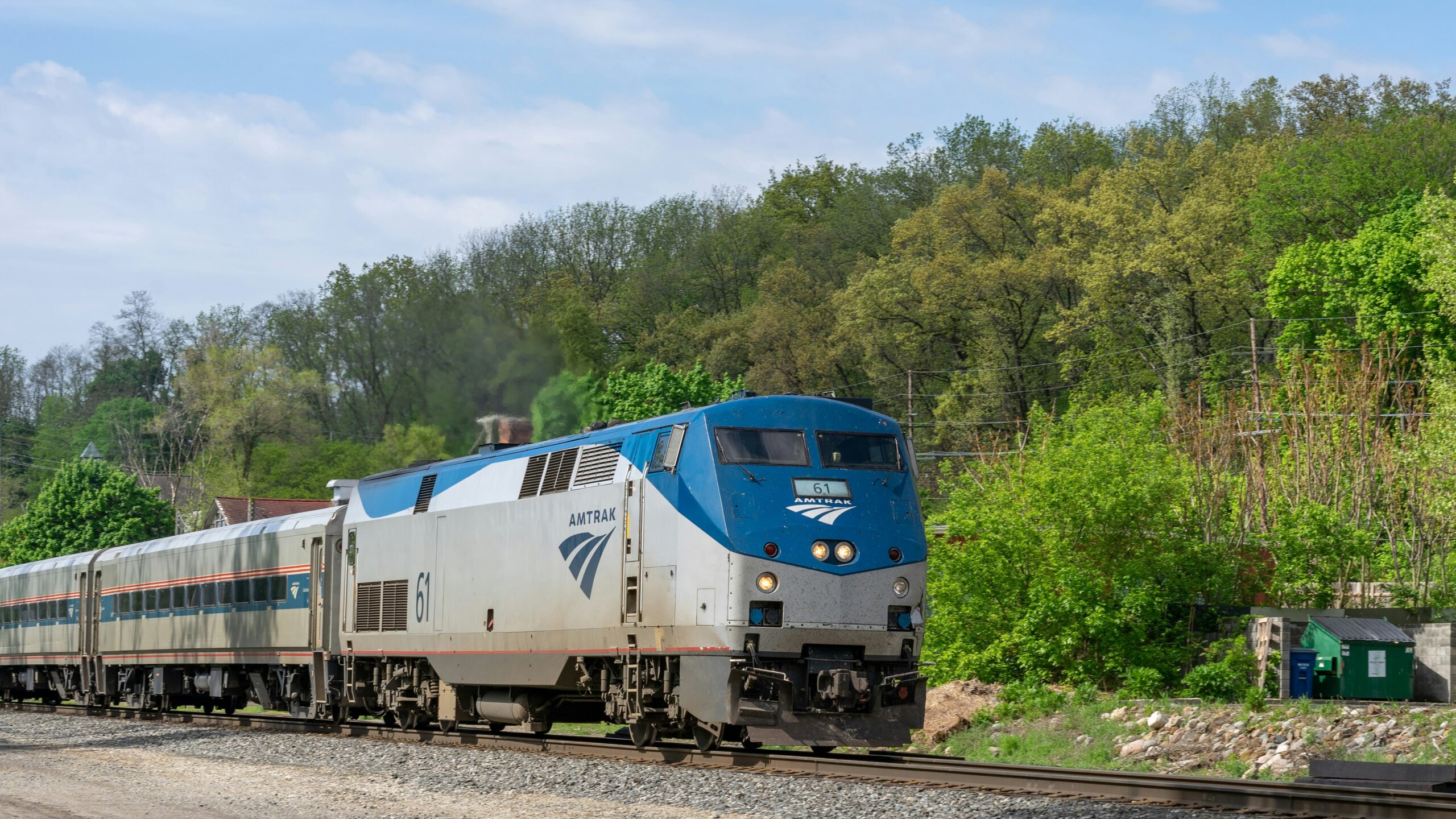
Amtrak offers a 10% discount on most rail fares for passengers 65 and older. On cross-border routes operated jointly with VIA Rail Canada, the qualifying age drops to 60. The discount applies automatically when a traveler enters a qualifying birth date during booking, though Amtrak notes that passengers should carry proof of age and be prepared to show it onboard.
A few practical caveats: the 10% reduction generally does not stack with other promotional fares or limited-time sales. Availability can vary by route, train class, and travel date, and sleeper accommodations or Acela business class may carry different discount structures. Still, for retirees who prefer rail to flying, particularly on scenic long-haul routes like the California Zephyr or the Coast Starlight, the savings are automatic and require nothing more than accurate booking information. On a $400 round-trip fare, that is $40 back in your pocket for entering your real birthday.
“We took the Coast Starlight from Los Angeles to Seattle last May, and the senior discount covered our lunch in the dining car,” says Tom Hadley, 71, a retired postal worker from Tucson. “It is not a fortune, but it is free money for doing nothing.”
Hotel chains with senior rates
Several major hotel brands maintain dedicated senior rates, though the details vary more than most travelers realize.
Marriott International offers a senior rate for guests 62 and older at participating properties worldwide. There is no single fixed percentage; savings depend on the property, room type, and season. Travelers need to select the senior rate option or enter the appropriate promotional code during booking, and front-desk staff may ask for identification at check-in. The rate is listed as an ongoing offer, not a limited-time promotion, but it may not appear for every room category or during peak-demand periods. The only way to confirm availability is to search for it directly on Marriott’s site or call the property.
Other chains worth checking include Hilton, IHG (Holiday Inn, Crowne Plaza), Best Western, and Choice Hotels (Comfort Inn, Quality Inn), all of which have offered senior or AARP-affiliated rates. Policies shift, so the most reliable approach is to call the hotel directly or check the brand’s website for current senior pricing before booking through a third-party site, where age-based discounts almost never appear.
A note on AARP: membership costs $16 per year (with discounts for multi-year sign-ups), and AARP-negotiated hotel rates sometimes beat a chain’s own senior rate. If you already belong, compare both rates side by side before booking. If you do not belong, run the numbers. A single hotel stay at a 10% to 15% AARP discount can cover the annual dues.
Rental cars, cruises, and other discounts worth investigating
Rental car companies have a mixed track record with senior discounts. Hertz, Avis, and Budget have all offered age-based or AARP-member rates at various times, but these deals shift seasonally and are not always visible in online search results. Retirees who belong to AARP, AAA, or a military veterans’ organization should compare those membership rates against any senior-specific pricing, because the membership discount is sometimes larger.
Cruise lines occasionally offer reduced fares or onboard credits for older passengers, particularly on repositioning sailings and off-peak departures. Holland America, Celebrity, and Royal Caribbean have all run age-related promotions in recent years, but no major line maintains a permanent, published senior discount the way Amtrak does. Booking directly with the cruise line or through a travel agent who specializes in senior travel is the most reliable way to find out what is available for a specific sailing.
You may notice that airlines are absent from this list. That is intentional. Most major U.S. carriers eliminated dedicated senior fares years ago. A handful of smaller or regional airlines have occasionally offered age-based pricing, but nothing consistent enough to recommend. For air travel, retirees are generally better served by flexible-date searches, credit card travel portals, and off-peak booking rather than expecting an age discount that no longer exists at scale.
A few other discounts that fly under the radar:
- National Park Service fee-free days: The NPS designates several fee-free days each year when all visitors, regardless of age, enter at no cost. Recent years have included Martin Luther King Jr. Day, the first day of National Park Week, the anniversary of the Great American Outdoors Act, National Public Lands Day, and Veterans Day. Retirees who time trips around these dates can save even without a Senior Pass.
- Global Entry and TSA PreCheck: Travelers 75 and older receive modified TSA screening procedures, but the fee for Global Entry ($120 for five years) and TSA PreCheck ($78 for five years) applies equally to all ages. Many travel credit cards reimburse these fees regardless of the cardholder’s age, which is worth checking before paying out of pocket.
- Foreign rail passes: Several European rail systems offer senior discounts. The UK’s Senior Railcard, for example, provides a third off most fares for travelers 60 and older. Retirees planning international trips should research country-specific rail passes before buying point-to-point tickets.
How to make sure you actually get the savings

The biggest barrier to using these discounts is not eligibility. It is awareness and follow-through. A few steps make a measurable difference:
- Ask before you book. Senior rates rarely surface as the default option on hotel, rental car, or cruise booking engines. You often need to select a specific rate category, enter a promo code, or call the reservation line directly.
- Carry proof of age. A driver’s license or passport works for every discount listed here. Some programs, like Amtrak’s, explicitly state that you may be asked to verify your age.
- Buy the Senior Pass early. The $80 lifetime pass pays for itself after a single visit to a park that charges a $35 per-vehicle entrance fee (Yellowstone, Grand Canyon, Zion). If you visit two or more fee-charging parks in a year, the $20 annual pass is already a bargain.
- Layer discounts across categories. Because these deals apply to different expense types (park fees, rail fares, lodging, car rentals), they do not conflict with each other. A retiree who uses a Senior Pass, books Amtrak at the senior fare, and reserves a Marriott room at the senior rate is compounding savings across three separate line items on the same trip.
- Verify before every trip. Corporate discount programs can change terms with little notice. Check current eligibility requirements on the provider’s official website before each booking, especially for hotel and rental car rates.
What a real trip looks like with these discounts applied
No federal agency or industry group publishes comprehensive data on how many retirees redeem these offers or how much they save collectively. But the math on individual trips is straightforward, and it is worth running the numbers on a realistic scenario.
Take a 10-day road trip for two retirees visiting three national parks, camping four nights, staying in hotels four nights, and taking one Amtrak segment. With a Senior Pass, they save roughly $35 per park entrance (about $105 total) plus 50% on campsite fees (potentially $40 to $80 depending on the sites). A Marriott senior rate might save $15 to $30 per night across four hotel stays ($60 to $120). Amtrak’s 10% discount on a $200 fare saves $20. Added together, that is somewhere between $225 and $325 in savings on a single trip, before accounting for any rental car or AARP discounts.
None of these require a membership fee beyond the Senior Pass itself (and, optionally, AARP). None require clipping coupons or downloading a special app. They simply require knowing the discount exists and selecting it at the point of purchase. For retirees traveling even a few times a year, the cumulative effect is significant. The only real cost is the few minutes it takes to ask.