



When Linda Ferraro retired from teaching in Connecticut in 2023, she gave herself one rule: no more shoveling snow. Within a year she had closed on a two-bedroom in Sarasota, Florida, joined a pickleball league, and started wondering why she hadn’t moved sooner. Her story is one version of a demographic shift that federal data shows accelerating across a handful of mid-sized cities, places now absorbing so many retirees that the influx is reshaping housing markets, healthcare systems, and local budgets.
The Census Bureau’s Vintage 2025 population estimates, released in March 2026, confirm that several metro areas across the South and Southwest continued to grow faster than the national average through mid-2025, with domestic migration as the primary driver. County-level IRS migration files, which track address changes on tax returns, show the same corridors gaining filers year after year. And the Net Migration Patterns tool from the University of Wisconsin-Madison reveals that many of these counties have been pulling in adults over 60 for decades. What’s happening now is not a post-pandemic fluke. It is a long-running trend that picked up speed.
Here are five cities at the center of it, along with what the data actually supports and what retirees should think twice about before signing a lease or a mortgage.
1. Sarasota, Florida

Sarasota has been drawing retirees since at least the 1970s, and the pipeline shows no sign of narrowing. The Sarasota-Bradenton-North Port metro area recorded some of the highest net domestic in-migration in Florida in the Vintage 2025 estimates, continuing a pattern visible in IRS data across multiple filing years. Both Manatee and Sarasota counties consistently show more tax filers arriving than leaving.
The appeal is not mysterious: Florida has no state income tax, the Gulf Coast beaches are minutes away, and a cultural infrastructure anchored by the Ringling Museum and a busy performing-arts calendar gives the area more texture than the typical beach town. Median home prices have climbed steeply since 2020 but remain well below what buyers face in Miami-Dade or Palm Beach County. Sarasota Memorial Health Care System and a growing cluster of specialty clinics mean retirees can access serious medical care without driving to Tampa.
The tradeoff is storm risk. Hurricane Ian made direct landfall near Sarasota in September 2022, and property insurers responded with sharp premium increases across Southwest Florida. According to the Insurance Information Institute, Florida’s average homeowners premium is among the highest in the nation. Retirees on fixed incomes need to treat insurance costs as a core budget line, not an afterthought.
2. Tucson, Arizona

Pima County, which contains Tucson, has shown up as a net gainer of older adults in the Wisconsin migration tool for decades, and the metro area continued posting positive domestic migration in the latest Census estimates.
Tucson averages roughly 286 sunny or partly sunny days a year, according to NOAA climate data for Tucson International Airport. The cost of living runs about 4% to 6% below the national average based on the Bureau of Economic Analysis regional price parities. And the presence of the University of Arizona gives the city a college-town energy that keeps it from feeling like a retirement-only enclave. Banner-University Medical Center and the UA Health Sciences campus provide a medical infrastructure that punches above its weight for a metro of roughly one million people.
On taxes, Arizona moved to a flat 2.5% individual income tax rate starting in 2023, and Social Security benefits are fully exempt from state tax. That combination makes the state more competitive with no-income-tax Florida than many retirees realize.
The long-term concern is water. Tucson depends heavily on Colorado River allocations delivered through the Central Arizona Project, and years of drought have forced the state into difficult negotiations over future supply. Retirees planning a 20- or 30-year stay should pay close attention to how those allocation talks unfold.
3. Asheville, North Carolina
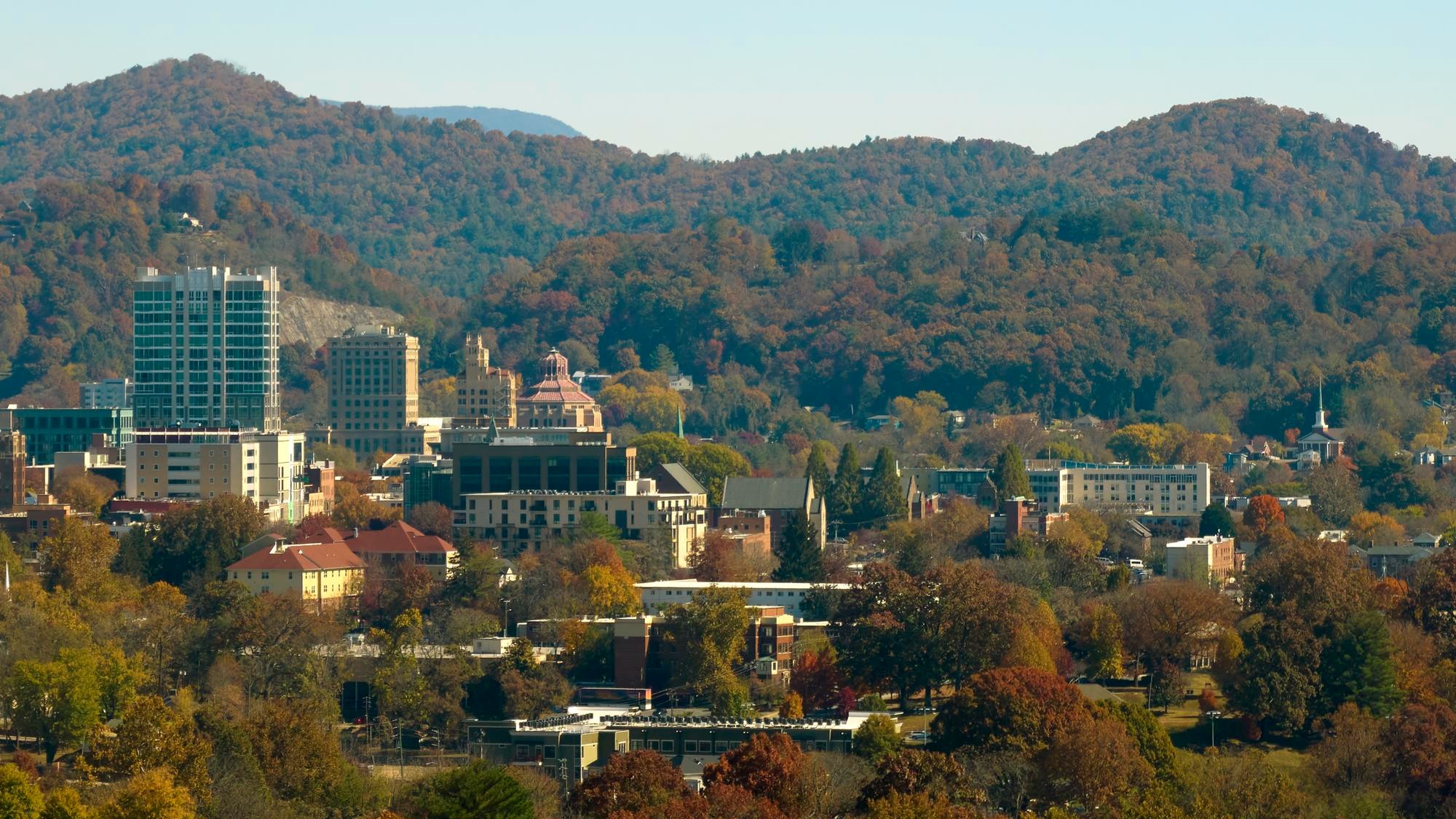
Asheville’s Buncombe County has attracted older adults for years, and the Wisconsin net migration data shows positive inflows among the 60-plus cohort stretching back decades. Sitting at roughly 2,100 feet in the Blue Ridge Mountains, the city offers four distinct seasons without the punishing summer heat that blankets much of the Southeast.
Healthcare access is a significant draw. Mission Hospital, now part of the HCA Healthcare system, serves as the regional trauma center for western North Carolina. The city also supports a dense cluster of independent medical practices and wellness-oriented services. That said, Mission’s transition to HCA ownership has generated community pushback over staffing levels and service changes, a dynamic worth researching for anyone whose medical needs go beyond routine care. North Carolina fully exempts Social Security benefits from state income tax, though other retirement income is taxable above certain thresholds.
Housing affordability has tightened. Buncombe County’s median home price has outpaced local wage growth over the past five years, and the city’s small geographic footprint, boxed in by mountains, limits new construction. Retirees arriving from Boston or San Francisco may still find relative value, but those relocating from lower-cost parts of the South may face sticker shock. The catastrophic flooding from Hurricane Helene in late September 2024, which devastated parts of western North Carolina, also raised pointed questions about climate resilience in mountain communities that had long considered themselves insulated from major storms.
4. Greenville, South Carolina

Greenville County has become one of the fastest-growing counties in South Carolina, and Census estimates show the broader Greenville-Anderson metro area gaining population well above the state average. IRS migration data reflects consistent net inflows, with local reporting identifying retirees as a meaningful share of new arrivals.
The city’s revitalized downtown, anchored by Falls Park on the Reedy River and a walkable Main Street, gives it an urban polish uncommon for a metro its size. Prisma Health, headquartered in Greenville, operates the largest healthcare system in the state, with multiple hospitals and specialty centers across the metro. South Carolina exempts Social Security from state tax and has been phasing in broader retirement-income deductions in recent years, making the tax picture increasingly favorable for retirees.
Location is a practical bonus. Greenville sits along the I-85 corridor between Atlanta and Charlotte, putting two major airports and big-city amenities within a few hours’ drive. For retirees who still travel frequently or want to stay close to family in larger metros, that connectivity matters. Summers are hot and humid, though less extreme than coastal South Carolina or the Georgia lowcountry.
5. The Villages and Greater Sumter County, Florida
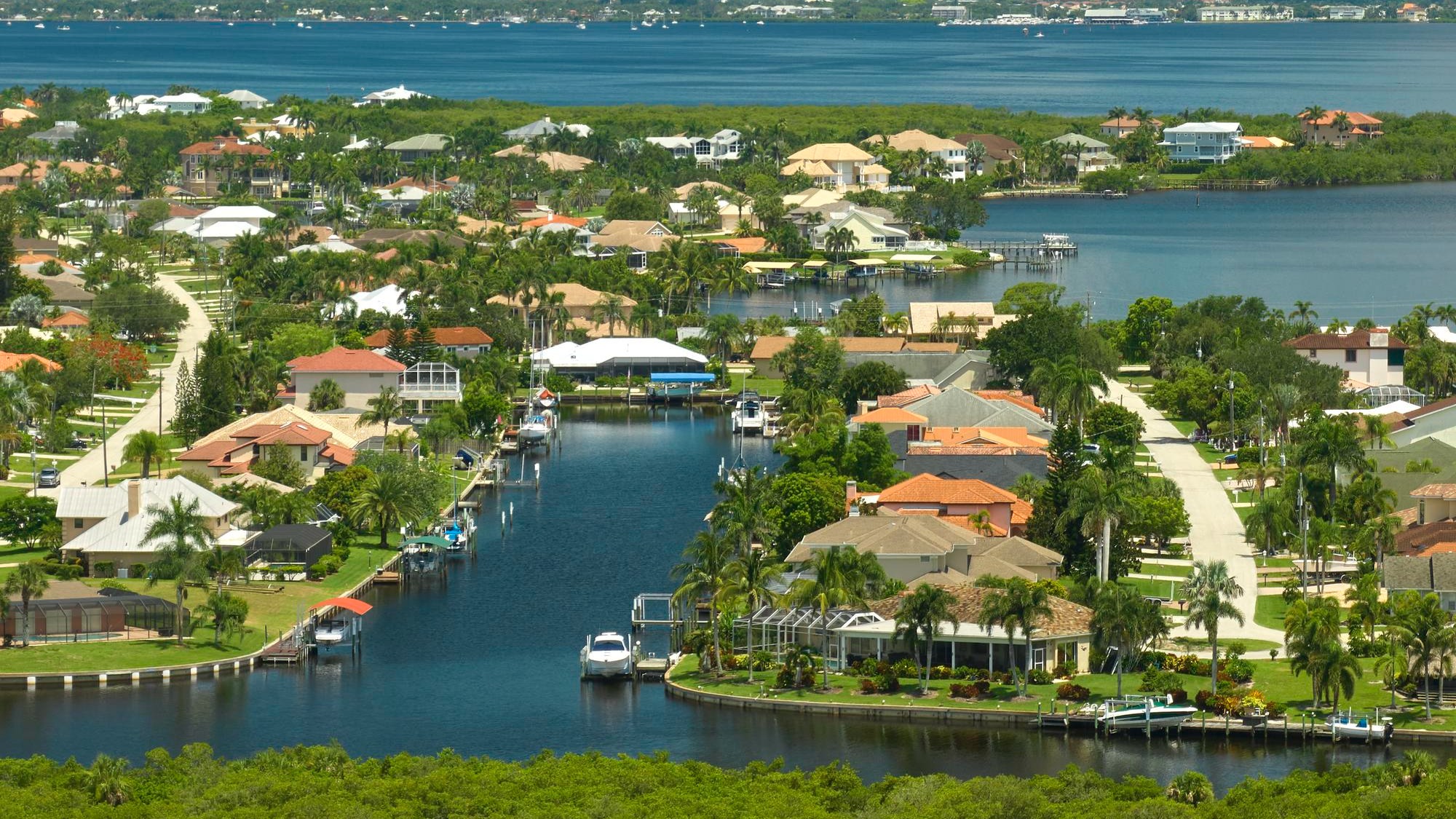
No list of retirement migration hotspots is complete without The Villages, the sprawling age-restricted community that covers most of Sumter County and spills into parts of Lake and Marion counties. Sumter County has ranked among the fastest-growing counties in the United States by percentage in nearly every recent Census release, and IRS data shows enormous net inflows of tax filers. The Wisconsin migration tool confirms that older-adult in-migration here has been a dominant demographic force for decades.
The Villages functions as a self-contained small city: recreation centers, dozens of golf courses, shopping plazas, restaurants, and a growing medical footprint that includes facilities operated by UF Health and AdventHealth. Florida’s zero state income tax remains a powerful draw, and the sheer scale of the community means new residents step into a ready-made social infrastructure designed specifically for people 55 and older.
Critics point to the community’s insularity and its strain on surrounding infrastructure, including roads, water systems, and emergency services in neighboring counties that absorb spillover growth. Home prices within The Villages vary widely by neighborhood and age of construction. Listings on major real estate platforms in early 2026 show entry-level resale homes starting in the mid-$200,000s, though prices climb quickly for newer builds and premium locations.
What the data can and cannot tell you
Federal migration data is powerful but imperfect. The IRS county-to-county files are the most granular source available, though the most recent public release covers the 2022-to-2023 tax year, meaning they still lag real-time conditions by a few years. The Census Bureau’s Vintage 2025 estimates are fresher, reflecting changes through mid-2025, but they report total net migration without breaking it down by age in the components-of-change tables. Analysts can reasonably infer that older adults account for a large share of inflows to established retirement destinations, but pinning down the exact split between retirees, remote workers, and young families requires combining datasets and making assumptions.
Motivations are even harder to quantify. No federal record explains why someone changed addresses. Survey research from AARP and academic demographers cites affordability, climate preference, healthcare access, and proximity to family as top factors, but those are self-reported preferences, not administrative facts. Within a single metro, one retiree may arrive chasing mild winters while another moves to be near grandchildren.
How to stress-test a retirement destination before you commit
Population growth data tells you where people are going. It does not tell you whether a place will work for your budget, your health needs, or your tolerance for heat, humidity, or hurricane season. Before committing to any of these cities, retirees should investigate property insurance costs (especially in Florida, where premiums have spiked since 2022), water-supply outlooks (especially in Arizona), state and local tax treatment of pensions and retirement-account withdrawals, the availability and quality of Medicare Advantage plans in the area, proximity to specialists for any chronic conditions, and the practical reality of summer weather.
The five cities on this list did not become retirement magnets overnight. Federal data confirms that the migration patterns feeding their growth are real, sustained, and intensifying. But a city that works beautifully for one retiree may be a poor fit for another. No dataset can substitute for a long visit, a conversation with a local financial planner, and a hard, honest look at the monthly numbers.