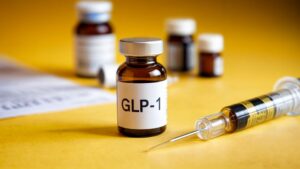



A year and a half ago, Medicare Part D enrollees got something they had never had before: a hard $2,000 annual limit on what they could spend out of pocket at the pharmacy. The program covers roughly 52.5 million people, according to CMS enrollment data, and for the approximately 3.4 million seniors who had been paying more than that cap each year, the change was transformative. But by mid-2026, the relief is running into a familiar problem: drug prices keep going up, premiums are absorbing the pressure, and the federal safety net designed to smooth the transition is starting to fray.
What the Part D redesign actually changed
The Inflation Reduction Act’s overhaul of Part D, which CMS finalized for the 2025 plan year, did three concrete things. It capped annual out-of-pocket costs at $2,000. It eliminated the coverage gap, the so-called “doughnut hole” that had forced patients to pay a larger share of costs mid-year. And it shifted a greater portion of catastrophic-phase liability from beneficiaries to insurers and drug manufacturers.
For patients taking expensive brand-name medications like Eliquis, Imbruvica, or Revlimid, the savings have been real. Someone who previously spent $6,000 or more a year on those drugs now hits the cap and pays nothing beyond it. The redesign also introduced a monthly payment option so enrollees can spread their $2,000 maximum across the calendar year instead of facing a large bill in January or February when they fill their first costly prescriptions.
But CMS recognized early that these changes carried a price tag for plan sponsors. The agency launched a premium stabilization demonstration alongside the 2025 bid cycle, using risk corridors to limit how sharply insurers could raise premiums in response to their new financial exposure. That step was an implicit admission: the benefit redesign could disrupt premiums and market stability even as it lowered costs at the pharmacy counter.
Drug prices keep rising underneath the cap

The $2,000 cap shields individual enrollees from the worst sticker shock, but it does nothing to control what manufacturers charge. Wholesale list prices, the starting point for what insurers and pharmacy benefit managers negotiate against, have continued to climb across many widely prescribed therapies.
State-level transparency programs provide some of the clearest evidence. The Texas Department of State Health Services runs a drug price disclosure program that tracks wholesale acquisition cost data for medications sold in or into the state and publishes annual reports documenting price increases. The program’s published data have shown year-over-year wholesale acquisition cost increases for dozens of commonly used drugs, though the program does not report a single aggregate percentage across all tracked medications. That pattern is consistent with findings from similar transparency programs in states like Oregon, California, and Colorado.
No single federal dataset yet aggregates wholesale acquisition cost changes across all 50 states for the full Part D formulary. Formularies vary by plan, utilization patterns differ by region, and manufacturers sometimes apply different pricing strategies in different markets. But the trend from state data and industry tracking is consistent: list-price inflation has not paused because of the IRA.
That matters because rising list prices feed directly into the calculations insurers use when setting premiums. Even after rebates and negotiated discounts, higher starting prices tend to push plan costs upward, and those costs eventually reach enrollees through their monthly charges.
Medicare drug-price negotiation adds a new variable
One of the IRA’s most closely watched provisions started producing results this year. Medicare’s first-ever negotiated prices for 10 high-cost drugs, including Eliquis, Jardiance, and Xarelto, took effect on January 1, 2026, after CMS completed negotiations with manufacturers. A second round covering 15 additional drugs was announced in early 2025, with those negotiated prices set to apply starting in 2027.
For the drugs on the list, the savings are expected to be substantial. CMS projected that the first 10 negotiated prices alone would save Medicare roughly $6 billion in net spending. But the negotiated list still covers a small fraction of the thousands of drugs in Part D formularies. Enrollees who rely on medications not yet subject to negotiation remain exposed to whatever prices manufacturers choose to set, filtered through insurer formularies and rebate arrangements that patients rarely see.
Whether future negotiation rounds will be broad enough to meaningfully slow overall Part D cost growth is an open question. Legislative proposals in Congress have sought both to expand and to curtail the program, and the outcome of those debates will shape the pricing landscape for years to come.
Premiums are the pressure point to watch
The premium stabilization demonstration CMS created for the 2025 transition was always designed to be temporary. Its risk corridors gave insurers a financial cushion while they adjusted to the new liability structure, but those tools were not built to last indefinitely.
As of mid-2026, CMS has not published projections on where average Part D premiums will land in 2027 or beyond. Actuaries pricing future plan years must make assumptions about utilization trends, manufacturer rebates, the impact of negotiated drug prices, and how aggressively plans will manage their formularies. If underlying costs rise faster than those assumptions anticipate, insurers may seek larger premium increases later in the decade. If negotiated discounts deepen and utilization shifts toward lower-cost alternatives, the premium impact could be more contained.
Here is where the math gets personal. Consider a beneficiary like a 72-year-old retiree on a blood thinner and a diabetes medication who previously paid $4,500 a year in cost-sharing but only $30 a month in premiums. Under the redesign, that person might now pay $2,000 in cost-sharing but $55 or $60 a month in premiums. The net savings are still real, potentially more than $1,500 a year, but they are smaller than the headline cap suggests. “I was thrilled when I heard about the cap, but then my premium went up and my plan dropped one of my drugs from its preferred list,” is the kind of frustration patient advocates say they are hearing more frequently from enrollees navigating the new benefit structure.
Beneficiaries with lower annual drug spending face a different calculus entirely. If their out-of-pocket costs were already well below $2,000, the cap offers them little direct benefit. Any premium increase they absorb is a pure cost increase, not a trade-off against lower pharmacy bills.
It is also worth noting that roughly 13 million Part D enrollees receive the Low-Income Subsidy, also known as Extra Help, which already limits their out-of-pocket costs and premiums well below the new $2,000 cap. For that group, the redesign’s most visible change matters less than whether their subsidy levels and formulary access remain stable.
Access restrictions could quietly erode the cap’s value

Beyond premiums, there is a subtler way the redesign’s costs could reach patients. Plans facing higher liability in the catastrophic phase have financial incentives to tighten formularies, expand prior authorization requirements, and steer enrollees toward preferred pharmacies or lower-cost therapeutic alternatives.
Some of those strategies are standard managed-care tools that can genuinely reduce waste and direct patients toward equally effective, less expensive drugs. Others can create real barriers for people who depend on specific brand-name therapies, particularly in oncology, autoimmune disease, and rare conditions where substitution is not always clinically appropriate.
The CY 2026 final rule codified many of the IRA’s Part D affordability provisions into formal regulation, converting what had been subregulatory guidance into durable legal requirements for how plans structure benefits and share liability. That provides operational clarity and legal enforceability. But the rule does not include comprehensive monitoring requirements for access measures, appeals volume, or formulary breadth that would let regulators or the public track whether the cap’s benefits are being quietly offset by tighter utilization controls.
Without that data, it will be difficult to assess the full picture of what the redesign means for the people it was designed to help.
What seniors should be tracking heading into 2027
The facts as of June 2026 point in two directions. Medicare’s redesigned drug benefit delivers a clear, enforceable ceiling on annual out-of-pocket costs, and the first round of negotiated drug prices has begun to put downward pressure on some of the most expensive therapies in Part D. Those are tangible, measurable gains.
But persistent list-price inflation across the broader formulary, incomplete national pricing data, temporary premium stabilization tools, and limited visibility into plan-level access restrictions leave real uncertainty about what seniors will pay in the years ahead. The $2,000 cap set a new baseline for what the program promises its enrollees. Whether it holds its value depends on decisions that manufacturers, insurers, and regulators have not yet made, and on data that has not yet been collected.
Enrollees approaching their Annual Election Period this fall should compare not just premiums but formulary coverage, preferred pharmacy networks, and prior authorization requirements across available plans. The cap guarantees a limit on out-of-pocket spending. It does not guarantee that the drugs you need will be covered, or that the plan covering them will cost the same as it did last year.